
Every developing commercial enterprise in the end hits an invisible ceiling.
It does not often appear dramatic. It indicates up as delayed tasks, management stuck in operational tasks, overworked groups, and possibilities postponed due to the fact that there truly aren’t sufficient arms or hours in the day. Revenue might be growing, but inner potential struggles to hold pace.
For many small and medium-sized companies, that is the moment outsourcing shifts from a summary idea to a practical necessity.
Outsourcing isn’t about cutting corners. It isn’t always an ultimate inn. It is a strategic decision used by many of the most established establishments in the international arena, from IBM to Accenture, to enhance efficiency, gain access to information, and maintain flexibility in adapting to changing markets.
The distinction these days is accessibility. SMEs can now leverage outsourcing models that had been as soon as limited to company-scale companies. With digital infrastructure, remote collaboration equipment, and specialized global talent swimming pools, outsourcing has become a sensible lever for agencies of all sizes.
This guide explains what outsourcing truly means, the way it works in current commercial enterprise environments, and how SMEs can use it strategically to build resilience, scale intelligently, and defend profitability.
What is Outsourcing? A Clear, Practical Definition
At its center, outsourcing is the exercise of delegating specific enterprise functions or duties to external experts as opposed to dealing with them internally.
Instead of building complete in-house teams for each operational requirement, groups partner with people, organizations, or controlled service companies who supply described results under dependent agreements.
Outsourcing for SMEs is planned. It entails scope definition, performance metrics, carrier-degree expectancies, and responsibility. It is basically different from ad-hoc freelancing or casual delegation.
Different Forms of Outsourcing
Outsourcing isn’t always a one-size-fits-all model. The structure you select relies upon your operational goals, price range flexibility, risk tolerance, and collaboration preferences. Understanding the different forms of outsourcing allows SMEs make informed selections rather than defaulting to the most commonplace or most inexpensive option.
Onshore (Domestic) Outsourcing
Onshore outsourcing entails working with carrier companies within your own country. This model frequently appeals to businesses that prioritise seamless communication, shared cultural expertise, and familiarity with local regulations.
Because each parties perform in the identical criminal and compliance framework, problems that include tax law, data protection, and employment requirements are less difficult to navigate. While onshore outsourcing might not always supply the lowest value financial savings, it frequently provides stronger alignment, faster real-time collaboration, and reduced regulatory complexity.
Offshore Outsourcing
Offshore outsourcing refers to partnering with groups placed in different international locations, often in regions recognized for specialised information or cost benefits. Many SMEs pick out offshore models to get access to technical expertise pools that can be confined or costly locally.
Beyond cost optimisation, offshore outsourcing can also create extended operational hours, allowing organizations to function across time zones and maintain close to-continuous productiveness. However, success in offshore arrangements relies heavily on clean documentation, structured conversation techniques, and strong venture control oversight.
Nearshore Outsourcing
Nearshore outsourcing sits between onshore and offshore models. It entails working with companies in neighbouring nations or areas with similar time zones and cultural proximity. For SMEs seeking a few value efficiencies without the operational friction of large time swings, nearshoring can strike a balanced compromise.
Collaboration tends to seem smoother than conventional offshore arrangements, whilst still providing access to broader skill markets. This version is especially beneficial for initiatives that require frequent verbal exchange and iterative feedback.
Project-Based Outsourcing
Project-based outsourcing makes a speciality of surely defined deliverables within a fixed timeframe. Businesses engage external teams for precise initiatives, along with website improvement, CRM implementation, device migrations, branding overhauls, or advertising campaigns.
Once the task concludes, the engagement may also quit until prolonged period. This model works nicely for SMEs that require specialised talents temporarily but do not want ongoing help. It also lets in leadership to evaluate the issuer’s overall performance before committing to longer-term partnerships.
Managed Services
Managed services represent a deeper and more integrated outsourcing dating. Instead of assigning isolated tasks, the business entrusts a whole operational characteristic to an external company. Common examples consist of IT infrastructure management, cybersecurity monitoring, payroll administration, or customer support operations.
In this shape, the issuer will become chargeable for performance, renovation, compliance, and continuous improvement within that area. Managed offerings frequently function beneath formal carrier-level agreements with honestly described performance metrics, making them suitable for SMEs searching for long-term operational balance and predictable provider transport.
Why SMEs Choose to Outsource
Outsourcing is rarely about replacing employees. More frequently, it’s about extending functionality without expanding constant fees.
Capacity Constraints
SMEs typically perform with lean groups. Leadership often handles strategic planning at the same time as dealing with operations, compliance, and customer relationships. As workload increases, strategic questioning declines.
Outsourcing creates respiration room.
Access to Expertise
Hiring niche specialists can be steeply priced and time-consuming. Whether it’s miles advanced cybersecurity, statistics analytics, or technical search engine marketing, outsourcing gives get admission to to experts who already function at a high stage.
Consultancies like McKinsey & Company frequently emphasise that access to specialist skills is one of the primary drivers behind outsourcing selections in higher-level organizations.
Financial Predictability
Full-time employment includes recruitment costs, onboarding, benefits, infrastructure, and software program licensing. Outsourcing shifts many of those constant prices into predictable carrier agreements.
For SMEs, this improves cash glide management.
Scalability Without Structural Risk
Growth may be choppy. Demand fluctuates. New possibilities emerge quickly.
Outsourcing allows corporations to scale up in the course of high-demand durations and decrease ability while essential without restructuring internal groups.
What Benefits Does Outsourcing Have for SMEs?
Outsourcing gives measurable blessings to SMEs while applied strategically.
Cost efficiency without compromising fine
Outsourcing no longer inherently imply decrease excellent. In truth, specialised vendors often offer excessive technical standards because of focused expertise and established methods.
For example, accounting companies that perform on structures like Xero or QuickBooks frequently offer more regular reporting accuracy than generalist internal personnel.
Focus on center talents
A manufacturing SME must prioritize product innovation and transport, not payroll compliance. A consulting corporation ought to focus on customer effects, not IT troubleshooting.
Outsourcing protects inner focus.
Get entry to to advanced generation
Many outsourcing companies invest closely in the era of infrastructure. Marketing agencies that manage campaigns through platforms like HubSpot or corporation-grade analytics structures offer tools that SMEs can’t have the funds for independently.
Operational chance reduction
Providers that perform below the worldwide requirements set by using bodies, which include the International Organization for Standardization, often maintain strict compliance protocols. This reduces the threat of regulatory mistakes and protection breaches.
Operational flexibility
Outsourcing contracts may also evolve. Businesses can accommodate growing scope, enlarge services, or redefine KPIs.
Flexibility is constructed into the operational structure.
Common Business Functions SMEs Outsource
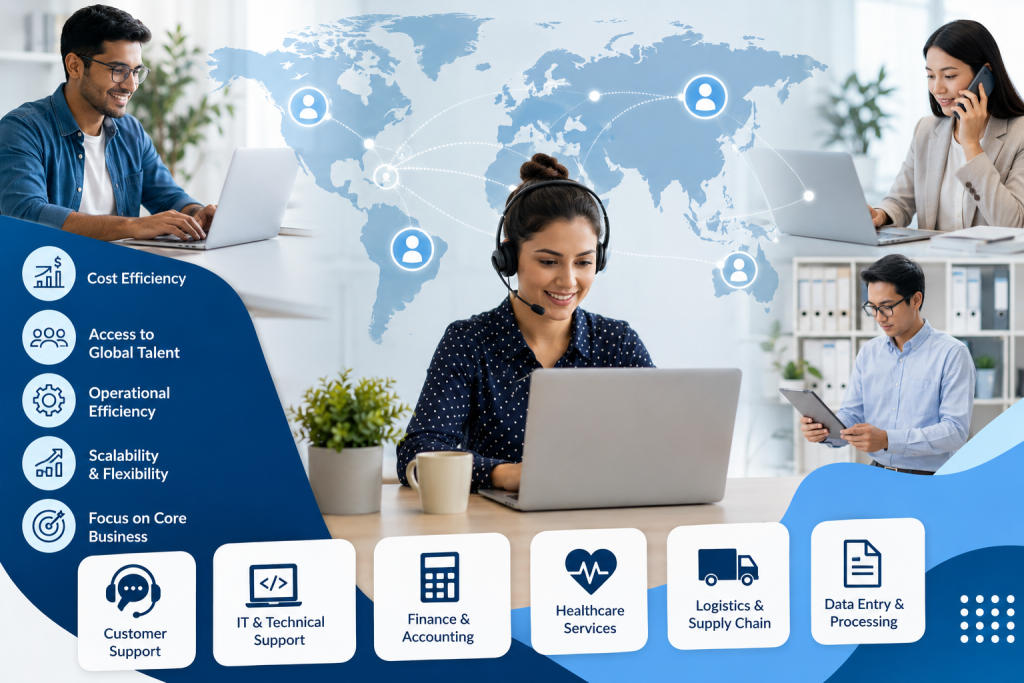
Outsourcing normally starts with crucial assist features which can be essential to operations; however, do not immediately pressure competitive differentiation. By delegating these areas to specialists, SMEs enhance efficiency, lessen risk, and permit inner teams to focus on strategic growth.
- Accounting and Financial Administration: Bookkeeping, payroll, tax instruction, and compliance reporting are typically outsourced to reduce errors and ensure regulatory accuracy. This generally results in higher monetary visibility and massive time and financial savings for leadership.
- IT Support and Cybersecurity: Managed service carriers manage machine tracking, backups, safety updates, and consumer assistance. This method guarantees technical stability and protection without the cost of keeping a complete in-residence IT team.
- Digital Marketing and Search Engine Marketing: SMEs outsource content creation, search engine optimization, paid advertising, and performance analytics to benefit from access to expert information and advanced gear. Research from Gartner shows this model is more and more utilized by growing mid-sized companies to scale visibility effectively.
- Customer Support: External help groups manage first-degree enquiries through email, phone, and live chat. This improves reaction times whilst allowing internal groups to recognize complicated problems and purchaser relationships.
- Software Development and Automation: Many SMEs outsource app improvement, system integrations, and internal automation to accelerate shipping. This reduces time-to-market and avoids the long-term value of hiring full-time engineering teams.
- Human Resources and Recruitment: HR specialists and recruitment partners manage hiring, onboarding, and compliance techniques. This allows SMEs to acquire skills effectively at the same time as lowering administrative and regulatory risk.
GTeams AI helps SMEs grow exponentially by connecting them to some of the best talents that they can outsource from Nepal. See all the fields you can outsource talents from with us.
Final Thoughts: Outsourcing as a Long-Term Growth Strategy
Outsourcing for SMEs has evolved from a fee-slicing tactic into a structural growth method.
- When applied thoughtfully, it lets in SMEs to:
- Access high-degree know-how
- Maintain monetary flexibility
- Improve operational performance
- Scale sustainably
- Protect management awareness
The groups that benefit the most from outsourcing aren’t those searching for shortcuts. They are the ones searching for leverage.
If your enterprise is drawing near capability limits or making ready for enlargement, the most productive next step isn’t necessarily hiring. It can be auditing your operations, identifying non-middle features, and exploring structured outsourcing partnerships.
Growth no longer usually requires greater inner complexity. Sometimes, it calls for smarter outside collaboration.